
Starter
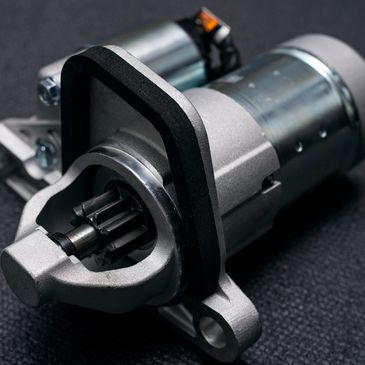
A Basic Guide to Starting Systems, Problems, Testing, and Safety
The starter is one of the most important electrical parts in a car. Its job is simple: it turns the engine fast enough for the engine to start running on its own. Every time you turn the key or push the start button, the starting system goes to work.
A starter may be small co
A Basic Guide to Starting Systems, Problems, Testing, and Safety
The starter is one of the most important electrical parts in a car. Its job is simple: it turns the engine fast enough for the engine to start running on its own. Every time you turn the key or push the start button, the starting system goes to work.
A starter may be small compared with the engine, but it uses a large amount of electrical power. Understanding how the starter works can help you understand why a car clicks, cranks slowly, or does not crank at all.
What Is a Starter?
A starter is a powerful electric motor.
When you try to start the vehicle, electrical power from the battery is sent to the starting system. The starter motor uses that electricity to physically rotate the engine.
The engine needs to rotate before combustion can begin. Air and fuel must enter the engine, the pistons must move, and the ignition system must operate at the correct time. The starter makes this first movement possible.
Once the engine starts running, the starter is no longer needed.
How Does a Starter Work?
The starting process begins with the battery.
When you turn the ignition key or press the start button, the vehicle sends a starting signal through the electrical system. Depending on the vehicle, this signal may travel through switches, relays, computers, and safety systems before reaching the starter.
The starter solenoid then helps connect battery power to the starter motor.
At the same time, the starter drive gear moves into position and engages the engine's flywheel or flexplate. The starter motor spins. The small starter gear turns the much larger flywheel or flexplate, which rotates the engine.
Once the engine starts, the starter gear disengages.
This entire process normally happens in only a few seconds.
What Is the Starter Solenoid?
The starter solenoid is an important part of the starter system.
A starter motor requires a lot of electrical current. The small ignition switch cannot safely carry all of that current directly to the starter motor.
The solenoid acts like a heavy-duty electrical switch. A smaller starting signal activates the solenoid, and the solenoid allows much greater electrical current to reach the starter motor.
On many vehicles, the solenoid is mounted directly on the starter.
A bad solenoid can cause a clicking sound without the starter motor actually turning the engine.
However, clicking does not automatically mean the starter or solenoid is bad. A weak battery or poor electrical connection can create similar symptoms.
What Is the Starter Drive Gear?
The starter motor cannot simply spin by itself. It must connect to the engine.
A small gear on the starter engages teeth on the flywheel or flexplate. When the starter turns, this gear rotates the engine.
After the engine starts, the gear must disengage.
If the starter drive does not engage correctly, you may hear grinding, spinning, or other unusual noises.
Damaged teeth on the starter gear, flywheel, or flexplate can also cause starting problems.
Grinding noises should never be ignored.
When Should a Starter Be Checked?
A starter should be checked when the engine does not crank normally.
You might turn the key and hear one click. You might hear several fast clicks. The starter might crank very slowly. Sometimes nothing happens at all.
A failing starter may also work sometimes and fail at other times.
For example, the vehicle might start normally in the morning but refuse to crank later. After sitting for a while, it may suddenly work again.
Intermittent problems like this can make diagnosis difficult.
The important thing is not to automatically replace the starter because the engine does not crank.
Test the system first.
Why Does a Starter Fail?
Starters wear because they contain electrical and mechanical parts that work under heavy loads.
Inside a starter are parts that spin, move, make electrical contact, and create strong magnetic forces. Over thousands of starts, these parts can wear.
Heat can also damage a starter.
Many starters are mounted low on the engine and may be located close to the exhaust system. High temperatures can increase wear on electrical components.
Oil or coolant leaks can also contaminate some starters.
Loose electrical connections, damaged wiring, poor grounds, weak batteries, and charging problems can place additional stress on the starting system.
Sometimes the starter itself is perfectly good and another problem is preventing it from working.
The Battery and Starter Work Together
The starter depends heavily on the battery.
A starter requires a large amount of electrical current. If the battery is weak, the starter may not receive enough power to crank the engine normally.
This can cause slow cranking or clicking.
A weak battery can easily be mistaken for a bad starter.
Before replacing a starter, check the battery condition and battery connections.
A good starter cannot work correctly without a good power supply.
Battery Cables and Grounds Matter
Large cables connect the battery to the starter and the vehicle's electrical ground.
These cables must carry a large amount of current.
A cable can look good from the outside but have corrosion or damage inside. Loose terminals and poor ground connections can also create resistance.
Resistance reduces the amount of electrical power reaching the starter.
This can make a good starter behave like a bad starter.
Checking the cables, connections, and grounds is an important part of starter diagnosis.
Clicking Does Not Always Mean a Bad Starter
One of the most common starting complaints is clicking.
A single strong click may happen when the starter solenoid activates but the starter motor does not turn. This could be caused by a starter problem, but more testing is needed.
Fast repeated clicking often happens when battery voltage drops too low while attempting to start the engine.
Loose or corroded battery connections can create similar problems.
Listen to the sound, but do not use the sound as the only diagnosis.
Find the problem. Do not guess.
What If the Starter Spins but the Engine Does Not?
Sometimes you may hear the starter motor spinning, but the engine does not turn.
This can happen if the starter drive gear does not properly engage the flywheel or flexplate.
The starter drive may be damaged. The gear teeth may be worn. The flywheel or flexplate teeth may also be damaged.
The starter may need to be removed for inspection.
Do not repeatedly operate a starter that is grinding or failing to engage correctly. Continuing to crank can cause additional damage.
What If the Engine Cranks but Does Not Start?
This is an important difference.
If you can clearly hear the engine turning normally, the starter is probably doing its main job.
An engine that cranks but does not start may have a different problem.
The problem could involve fuel, ignition, compression, timing, sensors, security systems, or other engine controls.
Replacing the starter will not normally repair an engine that already cranks at normal speed.
Knowing the difference between "no crank" and "cranks but does not start" can save a lot of unnecessary parts replacement.
Basic Starter Testing
Starter diagnosis should begin with the basics.
First, check the battery. Make sure it is properly charged and capable of supplying the necessary current.
Inspect the battery terminals for looseness or corrosion.
Inspect the starter wiring and ground connections.
A digital multimeter can be used for voltage testing. Voltage-drop testing can also help find unwanted resistance in the positive and ground sides of the starting circuit.
The starting signal can also be checked to see if the starter is actually being commanded to operate.
More advanced testing may include measuring starter current draw.
The correct test depends on the vehicle and the symptoms.
Voltage-Drop Testing
Voltage-drop testing is very useful for starter problems.
A cable can sometimes pass a simple visual inspection but still have too much electrical resistance.
A voltage-drop test checks how much voltage is being lost while electrical current is flowing through the circuit.
Testing can be performed on both the positive and ground sides of the starter circuit.
A large voltage drop can point toward a poor cable, loose connection, corrosion, damaged terminal, or ground problem.
This is another reason proper testing is better than simply installing a new starter.
Different Types of Starters
Not every starter is built exactly the same.
Traditional starters use a direct-drive design. The electric motor directly helps turn the starter drive.
Many newer vehicles use gear-reduction starters. These use internal gears that allow a smaller electric motor to produce strong cranking force.
Some modern vehicles with automatic start-stop systems use starters designed to operate much more often than traditional starters.
Hybrid vehicles can be very different. Some hybrids may use an electric motor-generator system to start the gasoline engine instead of using a traditional starter motor.
Always identify the system before beginning diagnosis or repair.
Rebuilt, Remanufactured, and New Starters
Replacement starters can come in several forms.
A new starter is made using new components.
A remanufactured starter is an older starter that has been taken apart, inspected, cleaned, repaired, and rebuilt to meet the remanufacturer's specifications.
Quality can vary between manufacturers.
The cheapest starter is not always the best choice, especially when the starter is located in a difficult area that requires several hours of labor to reach.
Correct fit and quality matter.
Starter Replacement
Starter replacement can be very easy on one vehicle and very difficult on another.
Some starters are located near the bottom of the engine and can be reached from underneath the vehicle.
Others may be hidden behind intake components, exhaust parts, brackets, shields, or other equipment.
Before removing the starter, make sure you understand its location and the correct procedure.
The battery normally needs to be disconnected before starter removal because the large starter power cable may have direct battery power.
A starter power terminal can remain electrically live even when the ignition is turned off.
This is extremely important.
SAFETY: Disconnecting Battery Power
Always treat the starter's large power cable as a serious electrical hazard.
On many vehicles, the starter power cable is connected almost directly to the positive battery terminal.
If a metal wrench touches the starter's positive terminal and a grounded metal part at the same time, a direct short circuit can occur.
This can create sparks, extreme heat, damaged wiring, burns, or fire.
Follow the correct battery disconnect procedure before removing a starter.
Many vehicles normally have the negative battery terminal disconnected first. However, modern vehicles may have special procedures because of computers, battery monitoring systems, security systems, and electronic settings.
Always check the proper repair information for the vehicle.
SAFETY: Wear Proper PPE
Wear proper personal protective equipment when working on a starter.
Safety glasses should be worn to protect your eyes from dirt, rust, metal particles, and debris.
Wear appropriate work gloves when handling heavy or sharp components.
If you are working underneath a vehicle, make sure your clothing, hair, tools, and equipment are safely controlled.
Remove loose metal jewelry before working around battery and starter electrical connections.
A ring, watch, bracelet, or necklace can create a dangerous electrical short.
SAFETY: Working Under the Vehicle
Many starters are removed from underneath the vehicle.
Never crawl underneath a vehicle that is supported only by a jack.
A hydraulic floor jack is used to lift a vehicle. Properly rated jack stands are used to support it.
Place the vehicle on a solid, level surface. Use the correct lifting points. Use wheel chocks when appropriate.
After the vehicle is supported, carefully verify that it is stable before going underneath it.
A starter can be replaced. Your safety cannot.
SAFETY: Starters Can Be Heavy
Some starter motors are heavier than they look.
When the final mounting bolt is removed, the starter may suddenly move or fall.
Support the starter before removing the last bolt.
Do not position your face directly underneath the starter while removing it.
Be especially careful when working in a tight area where you cannot easily move out of the way.
SAFETY: Hot Engines and Exhaust Parts
Starters are often located near exhaust components.
Exhaust manifolds, catalytic converters, pipes, engine blocks, and other parts can become extremely hot.
Allow the vehicle to cool before working near these areas.
Trying to save a few minutes is not worth getting burned.
Do Not Short the Starter Terminals
People sometimes attempt to bypass starting circuits by connecting starter terminals with a screwdriver or another metal tool.
This can be extremely dangerous.
It can create heavy sparks and high electrical current. The engine may also crank unexpectedly.
On some vehicles, bypassing the normal starting system can damage electrical components.
Use proper diagnostic equipment and procedures instead of intentionally shorting electrical terminals.
Starter Problems Can Look Like Other Problems
A no-crank condition can have many possible causes.
The battery could be discharged. A battery cable could be loose. A ground connection could be damaged. A fuse or relay could have failed. The ignition switch may have a problem. A park/neutral safety switch or clutch switch could prevent cranking. A security system could disable starting. Wiring could be damaged.
The engine itself could even be mechanically locked and unable to rotate.
This is why the starter should not automatically be blamed whenever an engine does not crank.
Diagnose the complete starting system.
Protect the New Starter
Before installing a new starter, find out why the old starter failed.
Make sure the battery is healthy. Check the charging system. Inspect the cables and connections.
Make sure the engine can rotate normally when necessary for the diagnosis.
A damaged flywheel or flexplate should also be repaired instead of installing starter after starter.
Mounting bolts should be installed correctly and tightened to the proper specifications.
Electrical connections should be clean, secure, and properly positioned.
Understanding the Starting System
The starter has one main job: turn the engine so it can start.
But that simple job depends on many other parts working together. The battery must provide enough power. The cables must carry the electrical current. The switches, relays, computers, and safety systems must allow the starting command to reach the starter. The starter gear must engage the engine correctly.
When the vehicle will not crank, start with the basics and test the system before replacing parts.
Always remember that starter circuits carry high electrical current. Disconnect power correctly, wear proper PPE, support the vehicle safely, stay away from hot components, and never create electrical shorts to test a starter.
Understanding how the starting system works can help you make safer repairs and better diagnoses.
Dirty Junky Car
Learn the system. Diagnose the problem. Repair it safely.