
Car Battery
A Basic Guide to Power, Maintenance, Types, and Safety
The battery is one of the most important electrical parts in a car. Without a working battery, most vehicles will not start. The battery provides electrical power to the starter, computers, lights, radio, fuel system, and many other parts. Even though a car battery may look like a sim
A Basic Guide to Power, Maintenance, Types, and Safety
The battery is one of the most important electrical parts in a car. Without a working battery, most vehicles will not start. The battery provides electrical power to the starter, computers, lights, radio, fuel system, and many other parts. Even though a car battery may look like a simple plastic box, it stores a large amount of electrical energy and must always be handled with care.
What Does a Car Battery Do?
A car battery stores electrical energy. When you turn the key or push the start button, the battery sends power to the starter motor. The starter motor turns the engine so it can begin running.
Starting an engine takes a lot of electrical power in a very short amount of time. This is why a weak battery may still turn on the lights or radio but may not have enough power to start the engine.
After the engine starts, the alternator produces electricity. The alternator helps power the vehicle and recharge the battery while the engine is running. The battery and charging system work together, but they are not the same thing.
A bad battery can cause starting problems. A bad alternator can also cause the battery to become discharged. This is why testing is better than guessing and replacing parts.
What Is Inside a Battery?
A common car battery is a lead-acid battery. Inside the battery are lead-based plates and an electrolyte made with sulfuric acid and water. A chemical reaction between these materials creates electrical energy.
Most regular passenger vehicle batteries are around 12 volts. A fully charged traditional 12-volt battery will normally measure around 12.6 volts when the engine is off and the battery has had time to rest. Voltage alone, however, does not always tell the complete condition of a battery.
A battery can sometimes show acceptable voltage but still fail when the starter places a heavy electrical load on it. A battery test or load test can give a better picture of its condition.
When Should a Battery Be Checked?
A battery should be checked when the engine begins cranking slower than normal. It should also be checked when you hear clicking while trying to start the vehicle, when the battery repeatedly goes dead, or when electrical systems behave strangely.
Battery age is also important. Many car batteries last around three to five years, but there is no exact life span for every battery. Heat, cold, driving habits, charging problems, vibration, electrical loads, and battery quality can all change battery life.
Hot weather can be especially hard on batteries. High temperatures can speed up chemical reactions and internal battery wear. A battery may look perfectly normal from the outside while becoming weaker inside.
Do not automatically replace the battery just because the car will not start. The problem could be a loose battery terminal, damaged cable, starter problem, charging problem, parasitic electrical draw, or another electrical issue.
How Do You Check a Battery?
Start with a visual inspection.
Look at the battery case. It should not be cracked, leaking, badly swollen, or damaged. Look at the battery terminals and cables. They should be tight and should not have heavy corrosion.
Corrosion may appear as white, blue, or green material around the terminals. Heavy corrosion can create resistance between the battery and the vehicle's electrical system. This resistance can make it harder for electrical current to flow.
A digital multimeter can be used to check battery voltage. Testing equipment can also check the battery's ability to produce current under load.
Many batteries have a Cold Cranking Amps rating, also called CCA. This rating gives an idea of how much starting power the battery can provide under cold conditions. When replacing a battery, use the correct battery type, physical size, terminal position, and electrical rating required for the vehicle.
Why Do Car Batteries Die?
A battery can fail simply because it has reached the end of its normal life. However, batteries can also become discharged for many other reasons.
Leaving lights or electrical accessories on while the engine is off can drain the battery. A vehicle that sits for a long time can slowly lose battery charge. A charging system problem can prevent the battery from being properly recharged.
A parasitic draw can also discharge a battery while the vehicle is parked. This means an electrical circuit continues using too much power after the vehicle has been turned off.
Loose or corroded connections can also cause starting and charging problems.
This is why a dead battery does not automatically mean the battery itself is bad. Proper diagnosis should come before replacing parts whenever possible.
Conventional Flooded Lead-Acid Batteries
The conventional flooded lead-acid battery has been used in vehicles for many years. It is usually one of the more affordable battery types.
Inside the battery is liquid electrolyte surrounding lead-based plates. The chemical reaction between these materials allows the battery to store and release electrical energy.
Flooded batteries can work very well in vehicles that were designed to use them. However, they must remain properly positioned because liquid electrolyte is inside the case. They can also release small amounts of gas during charging.
Older batteries sometimes allowed the electrolyte level to be checked and serviced. Many modern flooded batteries are sealed or labeled maintenance-free and should not be opened.
Never open a battery unless the manufacturer specifically says it is serviceable.
AGM Batteries
AGM stands for Absorbent Glass Mat.
An AGM battery is still a lead-acid battery, but its construction is different from a traditional flooded battery. The electrolyte is held in special fiberglass mats instead of freely moving around inside the battery.
AGM batteries can provide strong starting power and usually handle vibration better than traditional flooded batteries. They are commonly found in newer vehicles with large electrical demands, start-stop systems, luxury equipment, and other advanced electronics.
AGM batteries are usually more expensive than conventional flooded batteries.
If a vehicle was designed for an AGM battery, replacing it with a cheaper conventional battery may not be a good idea. The vehicle's charging system may be designed around the AGM battery.
Some newer vehicles may also require battery registration or battery management system procedures after battery replacement. Always check the correct service information for the vehicle.
Lithium Automotive Batteries
Lithium batteries are becoming more common in some automotive applications. They are especially popular in performance vehicles, racing applications, motorcycles, specialty vehicles, hybrids, and electric vehicles.
Lithium batteries can be much lighter than traditional lead-acid batteries. They can also provide strong power for their size.
However, lithium batteries are not automatically a direct replacement for every regular car battery.
Different lithium battery designs require specific charging controls and battery management systems. Using the wrong charger or installing the wrong battery can damage the battery or create a serious safety problem.
Lithium batteries can also behave differently in very cold temperatures.
A lithium battery should only be installed when it is designed for the vehicle and application. Follow the battery manufacturer's instructions and the vehicle manufacturer's requirements.
Flooded vs. AGM vs. Lithium
There is no single battery type that is best for every vehicle.
A conventional flooded lead-acid battery is common, proven, and usually less expensive. It can be a good choice when the vehicle was designed to use this type of battery.
An AGM battery generally provides better vibration resistance and can handle higher electrical demands. It is common in newer vehicles with advanced electrical systems and start-stop technology.
Lithium batteries can provide excellent power while reducing weight, but they require more attention to compatibility, charging, temperature, and battery management.
The best battery is normally the battery type that correctly matches the vehicle and its electrical system.
Battery Terminals and Corrosion
The battery terminals are extremely important.
A good battery cannot properly power the vehicle if the connection between the battery and cables is poor. Battery terminals should be clean and tight.
If corrosion is present, disconnecting and cleaning the terminals may be necessary.
Always follow the correct battery disconnect procedure for the vehicle. In many vehicles, the negative terminal is disconnected first and connected last. This can reduce the chance of accidentally creating a short circuit with a metal tool.
However, modern vehicles can have special battery disconnect procedures. Disconnecting the battery may erase settings, create warning lights, affect computer memory, or require certain systems to be relearned.
Always check the proper service information before disconnecting a battery.
Jump-Starting a Battery
Jump-starting a vehicle may look simple, but mistakes can cause serious damage.
Connecting jumper cables backward can damage electrical components. Sparks around a damaged or leaking battery can also be dangerous.
Before attempting a jump-start, inspect the battery. Do not attempt to jump-start a battery that is badly swollen, cracked, leaking, frozen, or severely damaged.
Use jumper cables or a jump pack that is designed for automotive use. Follow the instructions provided with the equipment and the vehicle manufacturer's recommended jump-start procedure.
Never guess where the cables should connect.
Some vehicles have special jump-start terminals away from the battery. This is common when the battery is located in the trunk, under a seat, or in another difficult location.
Battery Charging
A battery charger can restore charge to a discharged battery, but the charger must be correct for the battery.
A traditional flooded battery, AGM battery, and lithium battery may require different charging methods. Many modern chargers have different settings for different battery types.
Selecting the wrong setting can damage the battery.
Charging should be performed in a well-ventilated area away from flames, cigarettes, sparks, and other ignition sources.
Never place tools or metal objects across battery terminals. A battery can release a very large amount of electrical current through a direct short circuit.
Battery Replacement
Before replacing a battery, verify that the replacement is correct.
Check the battery group size, terminal location, CCA rating, battery technology, mounting method, and manufacturer requirements.
The battery must also be properly secured. A loose battery can move while driving. Movement can damage the battery, cables, terminals, or nearby components.
Modern vehicles may need additional procedures after replacement. Some vehicles use an intelligent battery sensor or battery management system. These systems monitor battery condition and charging.
Depending on the vehicle, a replacement battery may need to be registered or programmed into the vehicle's computer system.
SAFETY: Batteries Can Be Dangerous
Always treat an automotive battery as a serious electrical and chemical component.
Traditional lead-acid and AGM batteries contain corrosive materials. Battery acid can damage skin, eyes, clothing, paint, and other materials.
Batteries can also produce flammable gases. A spark near a battery can create a dangerous situation.
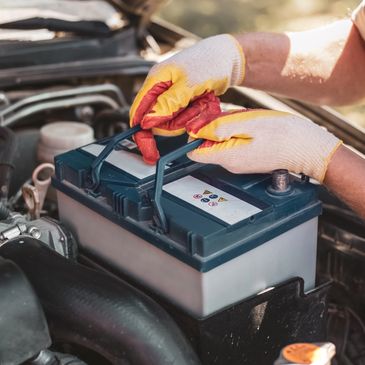
Wear proper personal protective equipment when working around batteries. Safety glasses or proper eye protection should be worn. Chemical-resistant gloves are also a good idea when handling a damaged battery, corrosion, or battery acid.
Remove loose jewelry such as rings, bracelets, watches, and metal necklaces before working around battery terminals. Metal jewelry can accidentally contact electrical power and ground at the same time. This can cause severe burns.
Use insulated or properly maintained tools whenever possible.
Never place a wrench, ratchet, extension, screwdriver, or other metal object across the positive and negative battery terminals.
Never smoke near a battery. Keep flames and sparks away.
Never work directly over a battery more than necessary, especially while connecting, charging, or jump-starting it.
If a battery is cracked, leaking, swollen, extremely hot, frozen, or badly damaged, stop working and follow the proper handling and disposal procedure.
Battery Acid Safety
Battery acid is dangerous.
If battery electrolyte contacts your skin, clothing, or eyes, follow the battery manufacturer's emergency instructions and seek appropriate medical help when needed.
Eye exposure is especially serious.
This is one reason eye protection should be worn before beginning battery work instead of waiting until something goes wrong.
Do not touch corrosion with bare hands. Do not wipe unknown battery residue with your fingers.
Treat leaking battery material as a chemical hazard.
Lithium Battery Safety
Lithium batteries create different safety concerns.
A damaged lithium battery can overheat and may create a fire risk. A battery that is swollen, punctured, crushed, smoking, unusually hot, or otherwise damaged should not be treated like a normal battery.
Do not open, crush, drill, puncture, or modify a lithium battery.
Only use chargers and equipment approved for the specific lithium battery.
Hybrid and electric vehicles can contain high-voltage lithium battery systems that are completely different from a normal 12-volt starting battery. High-voltage battery systems can cause severe injury or death.
Do not work on a hybrid or EV high-voltage battery without the proper training, procedures, PPE, and equipment.
Never Throw a Car Battery in the Trash
Car batteries should be properly recycled.
Lead-acid batteries contain valuable materials that can be recovered and reused. Many auto parts stores, repair shops, battery retailers, and recycling centers accept old automotive batteries.
Lithium batteries also require proper recycling and handling. They should not be placed in normal household trash.
Keep old batteries upright and secure during transportation. Protect the terminals from accidental contact with metal objects.
Take Care of the Battery and Charging System
A battery does much more than sit under the hood.
It provides the electrical energy needed to start the engine and supports many important electrical systems. The alternator then helps recharge the battery and supply electrical power while the engine is running.
When a vehicle develops a starting problem, do not immediately blame the battery. Inspect the battery, terminals, cables, starter circuit, and charging system as needed.
Learn what type of battery your vehicle requires before buying a replacement. Conventional flooded lead-acid, AGM, and lithium batteries have different designs, advantages, limitations, and safety requirements.
Most importantly, always respect the electrical energy and chemicals stored inside a battery. Wear proper PPE, keep sparks and flames away, use the correct tools, follow manufacturer procedures, and never take shortcuts with battery safety.
Learning the basics can help you understand what the battery does, recognize common warning signs, and make better decisions when your vehicle has an electrical or starting problem.
Dirty Junky Car
Learn the system. Diagnose the problem. Repair it safely.